
Hiring 101


Your Guide to Employee Referral Programs
An employee referral program is a structured recruitment strategy that incentivizes current employees to recommend qualified candidates for open roles. Because referred candidates come pre-vetted by someone who already understands your culture and expectations, referral hires consistently outperform those sourced through traditional channels.
Among recruitment strategies, employee referral programs and refer a friend programs enhance employee engagement while securing exceptional talent.
What is an Employee Referral Program?
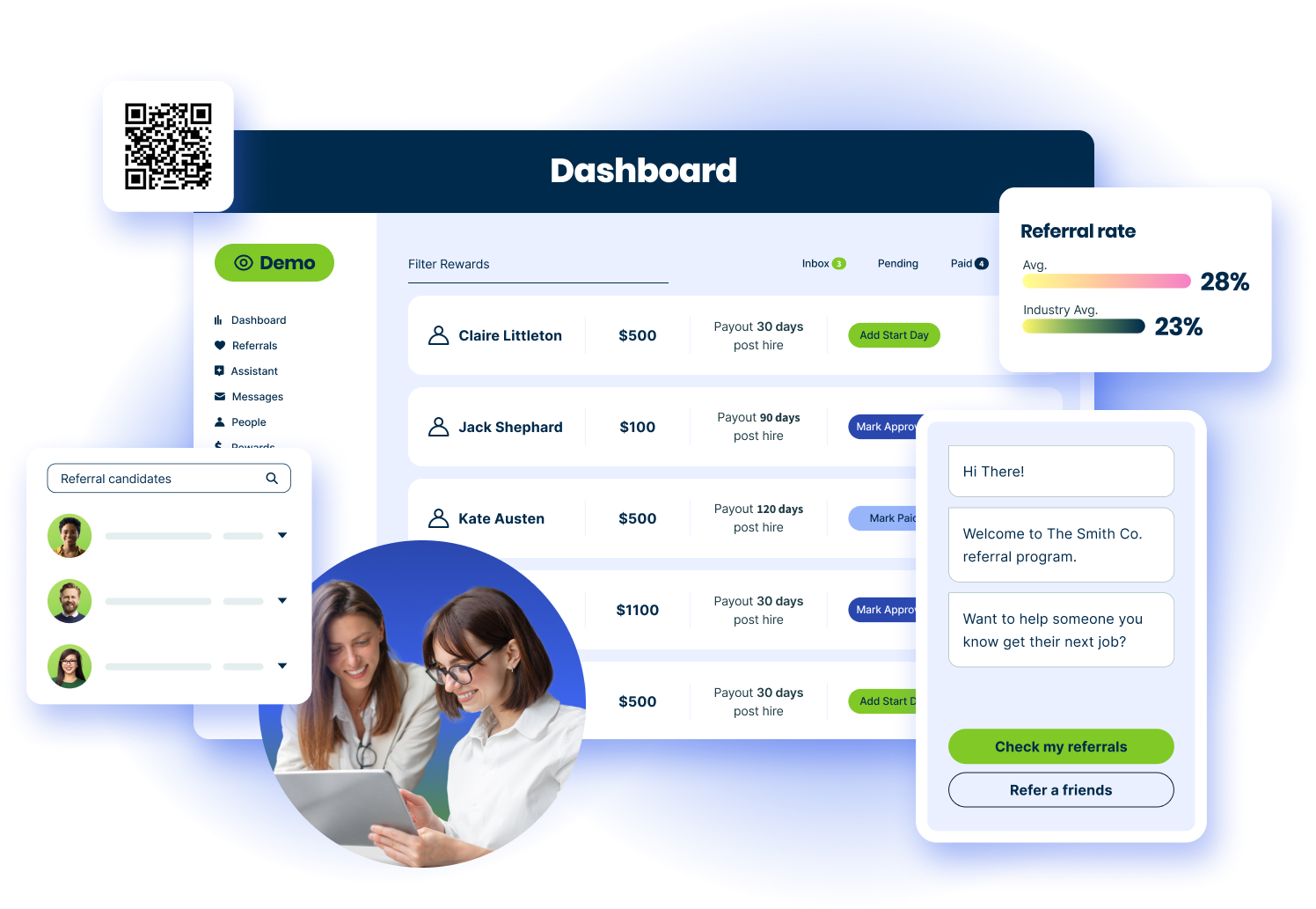
An employee referral program formalizes how companies tap into their workforce’s networks to find and hire candidates. When an employee refers someone, that recommendation carries real weight: the referrer understands the role, the culture, and what it takes to succeed. That context makes referrals one of the most reliable early signals in hiring.
Some companies refer to these as “refer a friend” programs, though the most effective versions extend beyond personal connections to include the full scope of an employee’s professional network.
What are the benefits of an employee referral program?
Referral programs consistently outperform other sourcing channels on the metrics that matter most.
Higher quality hires. Employees only refer candidates they believe will succeed, which means the first round of screening happens before the application. Referred hires tend to stay longer and ramp faster than candidates sourced through job boards.
Faster time-to-hire. The hiring process moves faster when a candidate arrives already vetted. Referrals reduce sourcing time and convert from application to offer faster than most other channels.
Stronger employee engagement. Employees who participate in referral programs report greater ownership and connection to company outcomes. Referring someone is itself a signal of confidence in the organization. That translates into higher satisfaction and retention.
Lower cost per hire. Referral bonuses cost significantly less than agency fees or paid sourcing. When measured against reduced time-to-fill and lower turnover, well-run referral programs are among the most cost-effective hiring strategies available.
A more diverse candidate pool. Your employees’ combined networks are broad and varied. A referral program that encourages participation across your entire workforce surfaces candidates you’d be unlikely to find through traditional job postings alone.
How do you create an employee referral program?
A referral program only works if employees actually use it. Here’s how to build one that delivers results:
1. Communicate clearly. Employees need to know which roles are eligible, exactly how to submit a referral, and what they receive if their candidate is hired. Confusion kills participation. Document the details and revisit them whenever roles open up.
2. Make the incentives worth it. Monetary bonuses are the default, but the strongest referral programs go further. Consider paid time off, tiered rewards that increase with successful hires, or experiences that feel proportionate to the ask.
3. Remove friction. If submitting a referral is complicated, employees won’t do it. An online portal built into your applicant tracking system removes the barrier and keeps referrals trackable from submission to hire.
4. Keep it fair. Every employee should have equal access to participate. Transparent, consistent processes for reviewing and tracking referrals build the trust that sustains long-term engagement.
5. Promote it regularly. A program announced once and never mentioned again underperforms. Build promotion into newsletters, team meetings, and internal channels — especially when positions are actively open.
6. Measure and adjust. Track referral volume, conversion rates, and hire quality over time. If certain teams or roles generate more referrals, identify what’s driving it and replicate that approach across the organization.
Employee referral programs unlock benefits like higher-quality hires, faster hiring, cost savings and diversity. By leveraging employees’ networks, you’ll gain a competitive edge and engaged workforce propelling long-term success.
Frequently asked questions about employee referral programs
What is an employee referral bonus?
An employee referral bonus is a reward given to an employee whose referred candidate is successfully hired. Bonuses are most commonly monetary, but can also include paid time off, prizes, or other incentives tailored to employee preferences.
Do employee referral programs actually work?
Yes. Referred candidates are hired faster, stay longer, and perform at higher levels on average than those sourced through other channels. The pre-vetting that happens naturally in a referral relationship reduces early-stage turnover and shortens time-to-productivity.
How do you measure the success of an employee referral program?
Key metrics include referral volume, application-to-hire conversion rate, time-to-hire for referred candidates versus other sources, 90-day and one-year retention rates for referral hires, and total cost per hire. Tracking these over time reveals where the program is working and where it needs adjustment.
What makes a referral program effective?
The most effective programs combine clear communication, meaningful incentives, a frictionless submission process, and consistent internal promotion. Programs that are announced once and left alone see participation drop quickly.
Read Next:
How to Write a Job Description Using a Careers Page to Enhance Your Employer Brand What is Recruitment Software?